

This newsletter is free and will stay free. If it's useful to you, a paid subscription is the best way to keep it going. —Luis G.
Table of Contents
1. The Government Accountability Gap: Digital Democracy/CalMatters
2. The Public Meeting Coverage Gap: Civic Sunlight
3. The Investigative Tooling Gap: Buried Signals
4. The Institutional Memory Gap: Lenfest AI Collaborative and Fellowship Program
🧩 Other Notable Builders: Henk van Ess, Michael VanZetta, Jack Brewster, Nick Hagar
Coverage gaps in American journalism are well-documented by now. Statehouse press corps have been cut in half. Local court reporting is sporadic at best. Two local newspapers still close every week, according to the State of Local News Project.
Thousands of communities have no original reporting on how federal policy affects them, no one tracking their school board, and no one sitting in on their county commission meetings.
Previous editions of this newsletter have traced these gaps in detail: the journalist pipeline collapse, the local school sports coverage gap, the web traffic metric that lied to newsrooms, the paywall problem that locks civic journalism behind subscription walls.
What I’ve been paying attention to lately is a small group of journalists and technologists who have started building AI-powered tools designed to fill specific coverage gaps. These aren’t corporate demos or automation plays designed to cut staff. They’re working tools, shipping now, built by people who have spent time inside newsrooms and can point to the exact place where coverage broke down.
In my view, the coverage gaps these tools address have two components that tend to get blurred together in most discussions about AI and journalism. One is structural: money, headcount, distribution. The other is informational: useful data sits in government databases, public records, legislative transcripts, and historical archives, but nobody has the time or tools to process it into journalism. AI can help with the informational half.
The structural half still requires funding, policy, and organizational will. Those are different problems with different solutions, and I think conflating them has slowed progress on both.
This edition profiles four projects working on the informational half, organized by the specific gap each one addresses. Below those are additional projects worth following.

1. The Government Accountability Gap
Full-time newspaper statehouse reporters fell from 374 to 245 between 2014 and 2022, a 34% decline, per Pew Research, and the number has kept dropping. Committee hearings produce hours of testimony. Campaign donations flow to legislators whose voting records go unexamined. Tracing lobbying influence means days of cross-referencing public records that most reporters don’t have.
David Lesher, a CalMatters co-founder and senior editor with nearly 30 years covering California state government, and Foaad Khosmood, a Cal Poly San Luis Obispo computer science professor, built Digital Democracy with funding from the Knight Foundation, Arnold Ventures, and the Lodestar Foundation.
The system tracks every word spoken in California public hearings and floor sessions (transcribed within 48 hours), every bill with full text and amendments, every vote, and every campaign donation, expenditure, gift, and travel disclosure. It scans all of that and generates tip sheets for reporters, flagging anomalies worth investigating.
CalMatters reporter Ryan Sabalow has used it to uncover stories, including a pattern where California Democrats almost always abstain from votes rather than voting against legislation, and which lobbying groups get their way most often.
This isn’t AI tool that does work unmonitored by humans. CalMatters CEO Neil Chase says he has drawn a clear line: the AI produces tip-sheet-level leads, not publishable conclusions. Reporters make the editorial calls. In the future, CalMatters plans to adapt the tool for other states and for city and county government.
In my view, if that expansion works, it would bring this kind of monitoring to thousands of local jurisdictions that currently have zero accountability coverage.

2. The Public Meeting Coverage Gap
Thousands of local government meetings happen every week with zero press coverage. The meetings are public, often recorded and posted online, but very few are watching.
Tom Cochran, co-founder of Civic Sunlight, told the Concord Monitor that when he asked a Belfast, Maine town council whether reporters still covered their meetings, the answer was: 25 years ago they had four, 15 years ago two or three, then it went to one, then zero.
Cochran, the former CTO of The Atlantic, and David Mortlock co-founded Civic Sunlight after realizing their own town’s meetings were impossible to follow without hours of video watching. Their tool uses AI to process meeting livestreams and transcripts into summaries delivered as free newsletters with time-stamped links to source video. It currently covers about 20 towns across Maine and neighboring states.
Their first newsroom customer, the Midcoast Villager, covers 43 towns with limited staff. Deputy manager Alex Seitz-Wald told Nieman Lab the tool is probably not as good as a junior reporter, but “I would much rather have anything than nothing.” Reporters verify everything before publication.
The tool has real accuracy problems. CJR reported that a Civic Sunlight newsletter stated Concord, New Hampshire’s city council had approved funding for two projects; as the Concord Monitor later noted, neither claim was true. Cochran told CJR accuracy runs about 90 to 95 percent, and the mistakes pushed them toward human review, which led to the Villager partnership.
Other projects are working in this space, including Chalkbeat’s in-house meeting monitor for school boards in New York City, and citymeetings.nyc, a free public proceedings newsletter.
In my opinion, the honest reporting of this tool’s flaws is part of what makes it worth watching. The gap is real, the tool works but makes mistakes, and the editorial safeguard of requiring journalists to verify AI output before publication is the right model.

3. The Investigative Tooling Gap
Investigative reporting depends more and more on digital tools for open-source intelligence (OSINT), but most independent reporters and small newsrooms can’t access the technical infrastructure that major outlets use. Investigative teams have gotten smaller alongside everything else in the industry.
The reporters still doing accountability work often operate alone or in pairs, without tech support, and without the budget for commercial OSINT platforms.
Tom Vaillant is a Swiss-based visual journalist, a fellow of the CUNY Newmark AI Journalism Lab’s Builders cohort, and founder of Buried Signals, a data-driven investigative publication and tool-building studio.
He’s built several tools aimed at working journalists. OSINT Navigator, built with Indicator, lets reporters describe an investigation task in plain language (“How do I track a crypto transaction?” or “What tools can I use to archive a webpage?”) and, according to Vaillant, returns curated results from nearly 7,500 tools across nine open-source OSINT toolkits.
As described on the Buried Signals site, his investigation pipeline uses AI sub-agents to research, verify, and report on leads, storing findings in a structured knowledge base built on Claude Code, Telegram, Obsidian, and Quarto Markdown.
He’s also built a government database monitor that alerts journalists when new data matching their investigation appears in public APIs, and released a skill file with 150 curated OSINT tools and operational security checklists that can be attached to any AI model.
None of these tools have been independently reviewed or tested by a third party as of this writing, but they are publicly available and Vaillant is building them within the CUNY Builders cohort community.
These tools are designed for the reporter working a story on a laptop in a coffee shop, not the reporter with a data engineering department down the hall.

4. The Institutional Memory Gap
When reporters leave a newsroom, the institutional memory they carried leaves with them. Major metro papers have decades of published work sitting in fragmented archive systems with different logins, inconsistent metadata, and weak search.
Reporters under deadline spend hours digging through old clips manually. At smaller outlets, the archive often isn’t digitized at all. And when external traffic dries up, the archive becomes even more important as internal infrastructure: it’s the institutional knowledge that gives new reporting its historical grounding.
Jim Friedlich, CEO of the Lenfest Institute for Journalism, led the creation of the Lenfest AI Collaborative and Fellowship Program, a $10 million partnership with OpenAI and Microsoft. The program placed dedicated AI engineers in 10 American newsrooms across two rounds of grants, each on two-year terms, each working on problems the newsroom itself identified.
At The Philadelphia Inquirer, CTO Matt Boggie oversaw the development of Dewey, an archive research assistant that searches everything the paper has published since 1978 (roughly 127,000 web articles and 200,000 digitized print articles) and returns summarized results with citations and links to originals. Reporters query it in natural language instead of guessing date ranges and retrying keyword searches.
The Inquirer expected the project to take 24 months. During a Microsoft hackathon, they had working code in two weeks. The team is open-sourcing the core architecture so other newsrooms can build their own versions.
Other results from the Collaborative: at Chicago Public Media (WBEZ and the Chicago Sun-Times), the fellow enabled same-day Spanish translation of articles that previously took days and is making 40 years of WBEZ audio searchable for the first time. The Minnesota Star Tribune built an AI-powered restaurant guide. The Seattle Times is using its fellow to build an ad sales prospecting tool.
In my opinion, the Lenfest model deserves attention from funders because it’s designed to be copied. The fellow structure and the open-sourcing are built to produce tools that spread beyond the original participating outlets.
🧩 Other Notable Builders
If you know a journalist or technologist building AI tools that fill specific coverage gaps, I want to hear about it. Send names and links to me on LinkedIn.
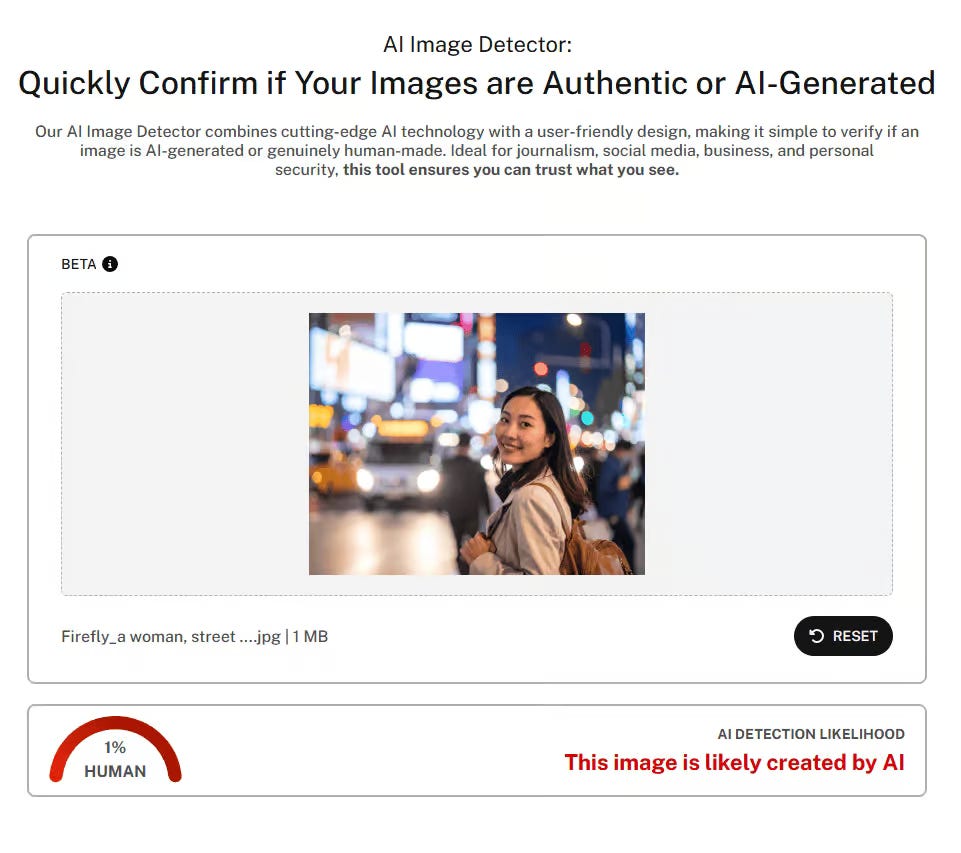
ImageWhisperer — Built by Dutch journalist and verification specialist Henk van Ess, ImageWhisperer is an image authentication tool used by newsrooms at AFP, AP, and others.
Upload a suspicious photo and it runs 41 independent checks in parallel, including a daily-updated database of known debunked fakes, 14 specialized detection models, forensic noise-pattern analysis, and AI visual inspection that catches things the math misses (melted faces, impossible architecture, mismatched lighting). It returns a color-coded verdict with a plain-language explanation of why.
The tool gained attention after BBC Verify cited its analysis of viral AI-generated videos of a snowstorm in Kamchatka, Russia, which newsrooms in Panama, Mexico, and Poland had aired as real footage.
Van Ess has been public about the tool’s failures too: after two experts exposed cases where it missed hybrid fakes and threshold errors, he rebuilt the detection system to compare foreground and background noise patterns separately and to require agreement across multiple models before issuing a verdict. PetaPixel covered the v1.0 launch in February 2026.
✧

PiZetta News Tracker, MyNewscast, MyNeighborhood — Michael VanZetta spent more than 20 years producing and directing content for news programs at stations in Washington, DC and Virginia, including WJLA, WUSA, and Sinclair Broadcast Group. He's now CEO of PiZetta Media and has built three AI tools aimed at local news distribution.
PiZetta News Tracker monitors YouTube uploads from local TV stations in real time and categorizes stories by topic (breaking news, crime, weather, politics, community coverage), giving newsroom teams a quick view of what's developing across markets.
MyNewscast lets viewers build their own lineup of local news stories from local station YouTube channels, generating a personalized rundown that works like a traditional broadcast newscast.
MyNeighborhood organizes local news content by ZIP code or region, aimed at helping people find stories relevant to their community, with potential applications in areas affected by news deserts. Note: these tools have not been independently reviewed as of this writing.
✧
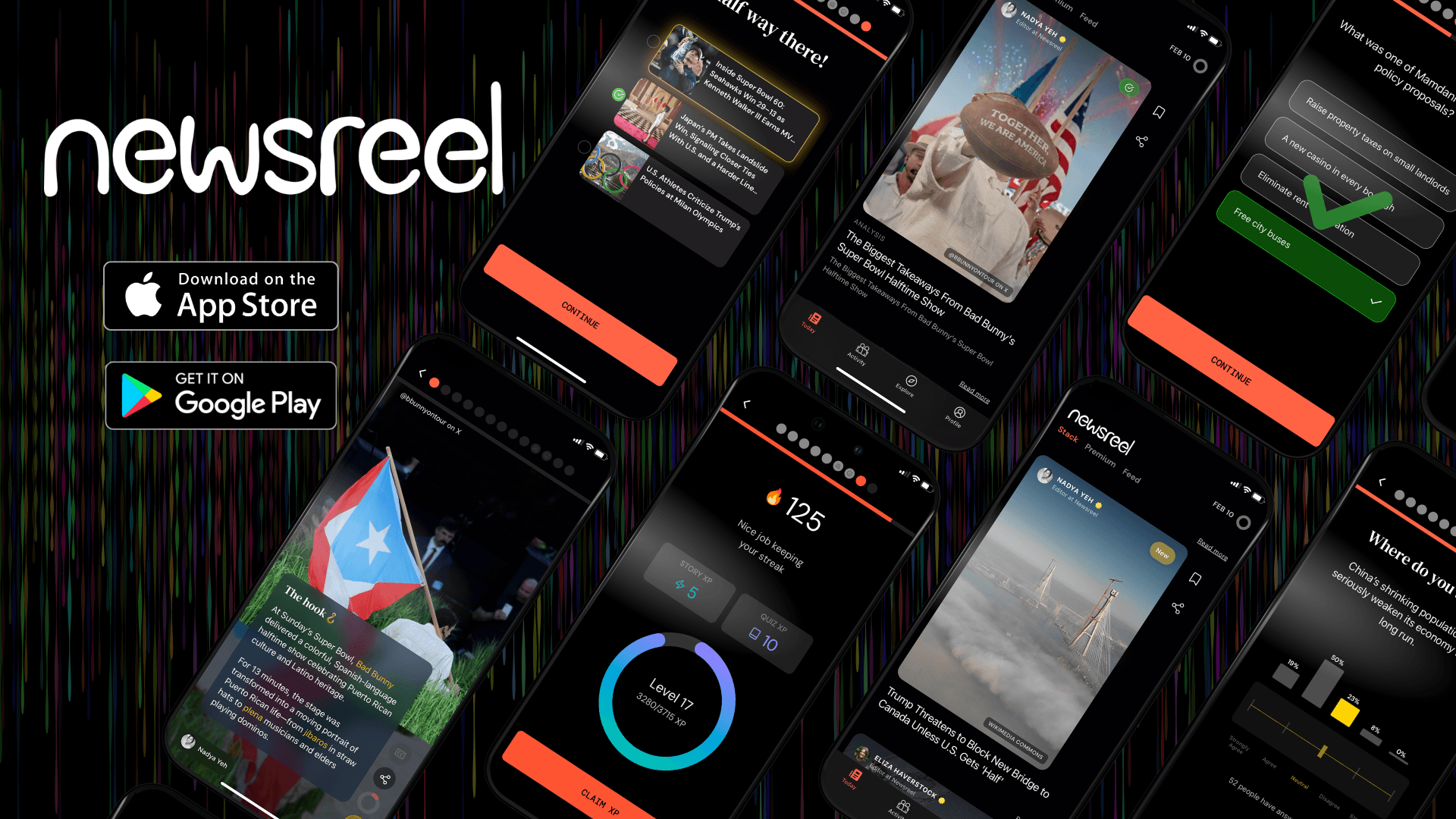
Newsreel and Ragebait Tracker — Jack Brewster is a journalist who has written for The Wall Street Journal, Forbes, Time, and Vice. In 2024, he broke the story uncovering the source of the viral claim about Haitian migrants in Springfield, Ohio. He's a Forbes 30 Under 30 honoree and former Fulbright research fellow.
After a stint at NewsGuard rating news website credibility, he built Newsreel, a short-form news app aimed at younger readers who have largely abandoned traditional news products. The app delivers journalist-written stories in a swipeable format with quizzes, polls, and streaks, and has partnered with schools and libraries across the U.S. and Europe.
Newsreel recently received investment from the Glen Nelson Center at American Public Media Group, per NewscastStudio. AI is used on the product and engineering side, not for writing stories. Separately, Newsreel launched @ragetrack on X, an AI bot that anyone can tag on any post. It rates the post 1-10 on a ragebait scale, identifies the specific manipulation tactic being used, and is politically neutral.
✧
Investigative Tipsheet Generator — Nick Hagar is a postdoctoral scholar at Northwestern University's Generative AI in the Newsroom (GAIN) Initiative and incoming assistant professor at the University of Minnesota. He's previously worked at The New York Times, Meta, and Patreon.
His recent work focuses on whether AI coding agents can do the preliminary grunt work of investigative journalism: scanning large, messy datasets for evidence-based leads before a reporter commits weeks to a full investigation. He built a set of reusable skills for Claude Code that direct the agent to process raw data and compile findings into a tipsheet, with no web searches and no steering beyond a high-level topic prompt.
He tested it against seven real investigative datasets, including 178 million opioid transaction records, 10.7 million FEMA disaster aid applications, and 5.6 million Virginia court records, then measured how many of the leads that human journalists had published the agent could independently recover.
The results: of 30 established leads across the seven cases, the agent found versions of most of them, though 20% were missed entirely and about 30% of the recovered leads were thin or only directionally aligned with the published findings.
Hagar has also published related work on using agents to wrangle messy document sets and on replicating a MuckRock/WHRO investigation into Virginia police decertifications using Claude Code, where he independently reproduced the top-line findings in under an hour. His work is honest about the limitations, which makes it a useful reference point for what these tools can and can't do right now.
✧
Genna / Stringr — Built by the team behind Stringr, a suite of AI tools founded by a former broadcast news producer, Genna's VidGen tool converts published text articles into short-form vertical videos for TikTok, Instagram, and YouTube.
Paste in a story URL and VidGen pulls from the article's copy and multimedia, adds background music and an AI voiceover, and produces a draft video that a human editor can then adjust (text, visuals, length, voiceover pronunciations) before publishing.
The Las Vegas Review-Journal, Nevada's largest daily newspaper, has been using VidGen for two years to scale video output across its social channels. Director of social media Caitlin Lilly told the News Media Help Desk that the tool functions like an additional staff member for a video team that doesn't have dedicated social media editors.
One VidGen-produced video on a road-rage shooting broke 1 million views on TikTok. The team applies AI labels to all VidGen videos and says editors must watch and listen to every video before publishing to catch voiceover mispronunciations, particularly for local names. Genna charges $3 per video (plus $1 for optional Getty licensing), with a $1,000 monthly minimum.
For some time we had two technologists building out databases more functional than what the city offered. We focused on some basic public info. The issue is paying the humans who manage those interfaces. I do believe it would be a great use of AI. If it was a technology we could share in some way.